 |
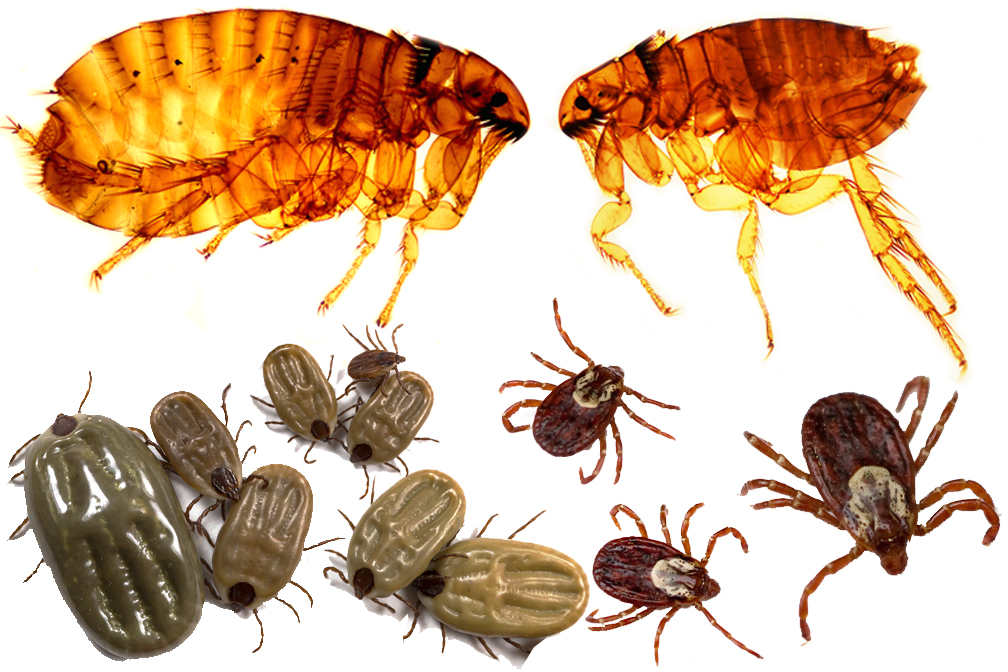
Flea Facts:
- One female flea lays 50 eggs a day.
- Fleas bite children and adults just as they do pets. Blood serves as a tasty food to the fleas. Fleas don't care if they get food from a pet or a human, they love the blood of both.
- Fleas feed off their hosts for 5 minutes.
- Fleas are in our area all year long.
- Fleas cause disease- A flea that finds its way to your pet or you, may have fed on the blood of a raccoon, opossum or even a rat. Now if that flea bites you or a pet, it can spread the same disease the rat or other animal was carrying.
- Fleas are the hosts of tapeworms, and dogs and cats that eat these fleas will get tapeworms.
- In a typical room, 5 percent of the fleas will be found on pets, 10 percent flea cocoons in the carpets, 35 percent flea larvae and 50 percent flea eggs, again in the carpets.
- Monthly flea treatment is a necessity.
|
|

|
Tick Facts:
Ticks carry many diseases – some are untreatable and fatal, and can cause death from blood loss. They also are very frustrating to control.
The life cycle of a tick can be as quick as 6 weeks or as long as 2 years. The pregnant female drops to the ground and lays hundreds of eggs. They hatch into tiny, very hungry “seed ticks” that search out an animal or person to feed on. Once they engorge with blood they drop off, shed their skin, and are called nymphs. Once again these ticks search out a host, attach themselves, and engorge with blood again. These are those tiny, gray, BB sized ticks that you often find in large numbers. This stage is often responsible for the potentially fatal blood loss ticks can cause. Each of these little guys doesn’t drink much, but when you have thousands of them they can easily kill an unprotected animal. Once again this stage drops off, sheds its skin, and finally reattaches as an adult. The adult males are the small, flat brown ticks and as stated earlier, the big fat brown ones are the girls. Controlling ticks is an involved subject and you must keep several points in mind while trying to keep their numbers down.
You may need to treat your home and yard as well when you find fleas and/or ticks. There are many Flea and Tick preventions and treatments available, but it is always best to check with a veterinarian to choose the right preventatives for YOUR pet specifically. Call us at 281-856-7023 today to discuss recommended preventatives for your pet!
|
 Processing ....
